

7 Advantages of Solar Panels Every Liverpool Homeowner Should Know
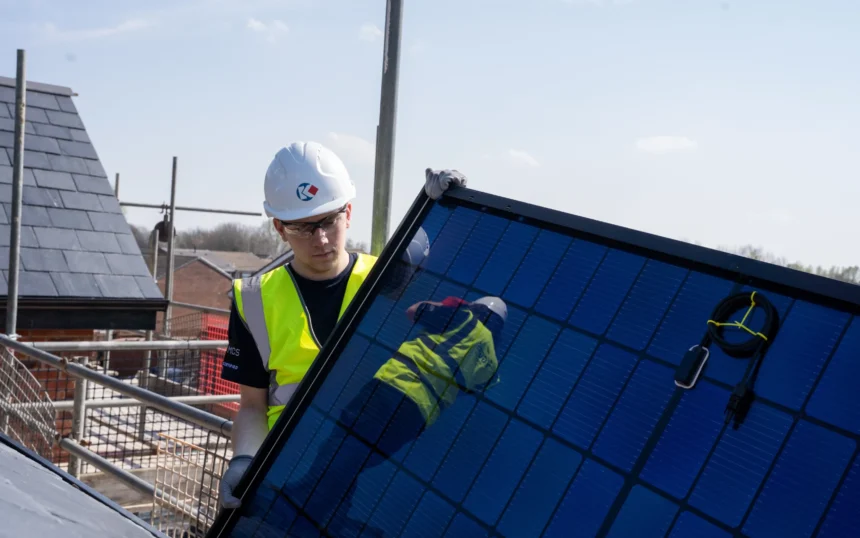
Energy bills in the UK aren’t going down. If anything, the last few years have made it clearer than ever that households relying entirely on the grid are exposed to price rises they have no control over, and no way to prepare for.
Solar panels change that equation. For Liverpool homeowners with the right roof and the willingness to make a medium-term investment, the advantages of solar panels go well beyond simply generating some free electricity. They reduce bills, generate income, add property value, cut carbon emissions, and provide a degree of energy independence that grid-only households simply don’t have.
This guide from GGRS Energie, specialist solar energy installers serving Liverpool and Merseyside, breaks down the seven most significant advantages of solar panels for UK homeowners. We’ve also included an honest section on the disadvantages, because anyone who tells you solar has no drawbacks is trying to sell you something without giving you the full picture.
Why Liverpool Homeowners Are Taking Solar Seriously
There’s a shift happening on residential streets across Liverpool. Solar panels — once the preserve of early adopters and the environmentally committed — are now a mainstream financial decision that growing numbers of Merseyside households are making.
The drivers are clear: energy prices remain high, solar installation costs have fallen significantly over the past decade, and the technology has matured to the point where the average residential system performs reliably for 25 years or more. The combination of lower upfront costs and elevated energy prices has compressed the payback period to the point where solar makes financial sense for a much wider range of households than it did five years ago.
Understanding the full range of solar energy advantages, not just the headline bill saving, is what turns an interesting idea into a confident decision.
Advantage 1: Significantly Lower Electricity Bills
The most immediate and tangible advantage of solar panels is the reduction in your electricity bill. When your panels are generating electricity, which for a correctly installed Liverpool system means daylight hours across every month of the year, every unit of that electricity you use in your home is a unit you don’t pay your energy supplier for.
At current UK electricity rates of approximately 24–28p per unit, a typical 4kWp solar installation on a Liverpool semi-detached can save a household £300–£500* per year on electricity costs alone, rising to £500–£800+ per year* with battery storage added.
That saving compounds over the system’s lifespan. A system installed today and performing reliably for 25 years generates tens of thousands of pounds in electricity savings over its lifetime, at current prices. If electricity prices rise further, those savings increase proportionally.
Reducing electricity costs is not the only financial advantage of solar panels, but it is the most consistent and predictable one. It’s there every day, whether or not you’re thinking about it.
* Figures are estimates only and actual savings will vary depending on energy usage, system size, roof orientation, electricity rates, battery storage, and how much solar energy is used within the home.
Advantage 2: Earn Money From Surplus Energy
When your solar panels generate more electricity than your household uses, which happens frequently on sunny days, that surplus doesn’t disappear. Under the UK government’s Smart Export Guarantee (SEG) scheme, you can be paid for every unit of excess electricity you export to the national grid.
SEG rates vary by supplier, but currently range from around 4p to 15p per unit. While this is lower than the rate at which you buy electricity, it means your solar system is effectively generating income during periods of peak production, even when you’re not home to use the electricity yourself.
For households without battery storage, a significant proportion of daytime generation is typically exported. The SEG payment for this exported electricity partially offsets the cost of electricity purchased in the evenings and overnight. With battery storage added, more electricity is retained for self-use, increasing savings and reducing dependence on SEG income, but the option to export remains.
The Smart Export Guarantee replaced the older Feed-in Tariff scheme. While the rates are lower than the Feed-in Tariff’s guaranteed payments, the SEG is still a meaningful financial benefit that every solar panel system registered with an MCS-accredited installer can access.
Advantage 3: Protection Against Rising Energy Prices
Perhaps the most underappreciated benefit of solar panels in the UK is not what they save you today, it’s the protection they provide against future energy price rises.
A household that generates 30–50% of its annual electricity from solar panels is structurally less exposed to grid price increases than one that relies entirely on the grid. If the unit price of electricity rises by 20% next year, as has happened multiple times in recent years, the solar-generating household sees a 20% increase only on the electricity it still buys. The electricity it generates itself costs the same as it always has: nothing.
This insulation against energy price volatility is a financial advantage that doesn’t appear in simple payback calculations but is genuinely significant over a 20–25 year system lifespan. Energy markets are unpredictable. Solar generation, once the system is installed, is one of the most stable and predictable costs in a household energy budget, because it’s zero.
Advantage 4: Increased Property Value
Evidence from the UK property market consistently shows that homes with solar panels sell for more than equivalent properties without them, and often sell faster.
Research and estate agent surveys suggest solar panels can add between 2% and 4% to a property’s value, depending on the size of the system, its age, and the property’s location. For an average Liverpool home, that translates to a meaningful increase in sale price, one that may offset a significant proportion of the original installation cost when the property is eventually sold.
The mechanism is straightforward: buyers know that a solar-equipped home will have lower running costs. Lower running costs translate to a higher amount buyers are willing to pay for the property. As energy costs have risen, this premium has become more pronounced; buyers are more acutely aware than ever of what their energy bills will be.
Solar panels in Liverpool are therefore not just a cost-reduction tool. For homeowners planning to sell at some point in the next 5–20 years, they are also a property improvement that can generate a direct return on investment at the point of sale.
Advantage 5: Reduced Carbon Footprint
Solar panels generate electricity without burning fossil fuels and without producing greenhouse gas emissions during operation. For Liverpool households concerned about their environmental impact, solar is one of the most effective actions an individual homeowner can take.
A typical 4kWp residential solar installation in the UK offsets approximately 1.3–1.8 tonnes of CO₂ per year, the equivalent of taking a small car off the road, or stopping several hundred flights’ worth of emissions over the system’s lifespan. Over 25 years, a single household installation prevents tens of tonnes of CO₂ from entering the atmosphere.
The environmental advantage of solar panels extends beyond the household. Increased domestic solar generation reduces demand on fossil fuel power stations, contributing, at scale, to the UK’s national decarbonisation goals. Every solar-equipped home in Liverpool is a small but genuine contribution to the city’s and country’s transition away from carbon-intensive electricity.
Advantage 6: Low Maintenance and Long Lifespan
Solar panels are designed to be durable, reliable, and low-maintenance. Because they have no moving parts, they do not require the same level of ongoing servicing as many other home energy systems.
That said, regular checks and professional maintenance can still be valuable. A well-maintained solar system can continue performing efficiently for many years, helping to identify potential issues early, keep panels working as they should, and protect the long-term return on your investment.
Most quality solar panels are built to last for decades, with performance warranties that give homeowners added confidence in their long-term output. The inverter, which converts the electricity generated by the panels into usable power for the home, may need replacing during the lifespan of the system, depending on the product and usage.
Compared with systems such as gas boilers, which often require more frequent servicing, part replacement, and eventual full replacement, solar panels typically involve a much lower maintenance burden.
The practical benefit is clear: once installed, a solar panel system can provide reliable, long-term energy generation with relatively limited ongoing maintenance. With professional servicing from GGRS, homeowners can help keep their system performing at its best and get the most from their investment over time.
Advantage 7: Energy Independence and Battery Storage
Every unit of electricity your panels generate and your household uses is a unit you are not dependent on an energy supplier to provide. That independence, modest at first, more significant with battery storage, is an advantage that grows in value as energy prices and grid reliability become increasingly important concerns.
Battery storage takes energy independence to a higher level. A home battery charged from your solar panels during the day can power your home through the evening and night, dramatically reducing the hours in which you depend on the grid at all. Households with solar plus battery storage frequently cover 60–80% of their annual electricity needs from their own generation, a level of self-sufficiency that was not practically available to ordinary homeowners even five years ago.
For Liverpool households interested in saving energy costs long-term and reducing dependence on the grid, the solar-plus-battery combination is the most complete solution currently available at the residential scale.
Are There Any Disadvantages to Solar Panels?
An honest guide to the advantages of solar panels should also address the limitations.
Upfront cost. A residential solar installation requires an initial investment, and the overall cost can vary depending on factors such as system size, roof suitability, energy usage, installation requirements, and whether battery storage is included. While the long term financial case can be strong, homeowners will need to consider the upfront cost or available finance options before moving forward.
Roof dependency. Not every roof is ideal. North-facing roofs, heavily shaded roofs, or roofs in poor structural condition may not be suitable for solar installation. A reputable installer will tell you this before you spend anything.
Variable generation. Solar panels generate less in winter and on overcast days. This is manageable, particularly with battery storage, but it means solar cannot fully replace grid electricity in the UK climate.
System lifetime considerations. Inverters require replacement after 10–15 years. This is a predictable cost but one to factor into long-term financial planning.
These are real considerations, but for most Liverpool homes with suitable roofs, they don’t outweigh the substantial advantages.
GGRS Energie — Solar Panels in Liverpool
GGRS Energie is a specialist solar energy provider serving Liverpool and Merseyside. We install MCS-accredited solar panel systems and battery storage solutions for residential homeowners, offering honest advice, transparent pricing, and a free home assessment before any commitment is made.
We don’t oversell solar. If your roof isn’t suitable, we’ll tell you. If you qualify for funded installation through ECO4 or government schemes, we’ll confirm that before discussing any purchase. And if solar is the right investment for your property, we’ll give you the projections, the written proposal, and the professional installation to back it up.
If you’re looking for solar providers near me in the Liverpool area, or you want to understand the specific advantages a solar installation could deliver for your home, get in touch with GGRS Energie today for a free, no-obligation assessment.
Frequently Asked Questions
What are the main advantages of solar panels in the UK?
The main advantages are: significantly reduced electricity bills, income from surplus energy via the Smart Export Guarantee, protection against future energy price rises, increased property value, a reduced carbon footprint, minimal maintenance requirements, and greater energy independence, particularly when combined with battery storage.
Are solar panels worth it in Liverpool?
Yes, for most homes with suitable roofs. Liverpool receives adequate annual sunshine hours for productive solar generation, and current energy prices make the financial case stronger than at any previous point. GGRS Energie provides household-specific savings projections as part of a free home assessment.
Do solar panels increase property value in the UK?
Evidence consistently shows solar panels add between 2% and 4% to UK property values, and homes with solar often sell faster than equivalent properties without. The increase is linked to lower running costs, which buyers increasingly factor into their offers.
How much do solar panels reduce electricity bills?
A typical 4kWp system on a Liverpool home can reduce electricity bills by £300–£500 per year without battery storage, and £500–£800+ per year with battery storage included. Exact savings depend on household usage patterns and the size of the installation.
What is the Smart Export Guarantee?
The Smart Export Guarantee (SEG) is a UK government-backed scheme that requires energy suppliers to pay households for surplus solar electricity exported to the grid. Rates currently range from 4p to 15p per unit. Only installations certified by an MCS-accredited installer qualify.
How do I find a reputable solar provider near me in Liverpool?
Look for MCS-accredited installers with verified local references and transparent quotations. GGRS Energie is MCS-accredited, Liverpool-based, and offers a free home assessment with no-obligation proposal. Contact us here to get started.
Conclusion
The advantages of solar panels for Liverpool homeowners are concrete, measurable, and compelling: lower bills, export income, price protection, added property value, environmental benefit, minimal maintenance, and growing energy independence.
The question for most households is not whether solar has advantages. It clearly does. The question is whether your specific home, your roof, your usage, and your plans make the investment worthwhile. That’s exactly the question GGRS Energie is here to answer.
Get in touch today for your free home assessment — and find out what the advantages of solar panels could mean for your home specifically.